Becca Odom Wellness
Offering Trauma-Informed Somatic Trainings for Mental Health Professionals.
Earn CE credits while learning somatic tools that help clients heal — and help you prevent burnout.
VIEW OUR PROGRAMS


Becca Odom Wellness is a Continuing Education (CE) training center that provides somatic and trauma-informed trainings that foster nervous system regulation, resilience, and embodied healing for mental health professionals.
As an ACE provider by the ASWB ACE program, we offer practical, body-based tools that support both clinical effectiveness and personal well-being.
Our goal is to provide a safe environment for self-exploration, healing, and growth while developing a deeper connection between the mind and body. Helping professionals work with trauma survivors every day, and our mission is to empower them with practical tools for healing, trauma recovery, and burnout prevention.
Our CE trainings are taught by Becca Odom LCSW, E-RYT, a clinical therapist with over a decade of experience in the mental health field.
Nervous system regulation is our passion and we offer a wide variety of resources in both our live and self-paced CE trainings, along with free resources in Becca's YouTube Channel and digital Newsletter.
LEARN MOREWhat Makes Our Trainings Different

Somatic and Dynamic:
Offering engaging and effective techniques to use in client sessions and for your own burnout prevention.

Rooted in Polyvagal Theory:
Blending modern neuroscience with ancient yoga practice to create nervous system repair.

Preventive Care:
Tools to manage daily stressors, support systems in the body impacted by trauma, and our rebuild relationship with the body.
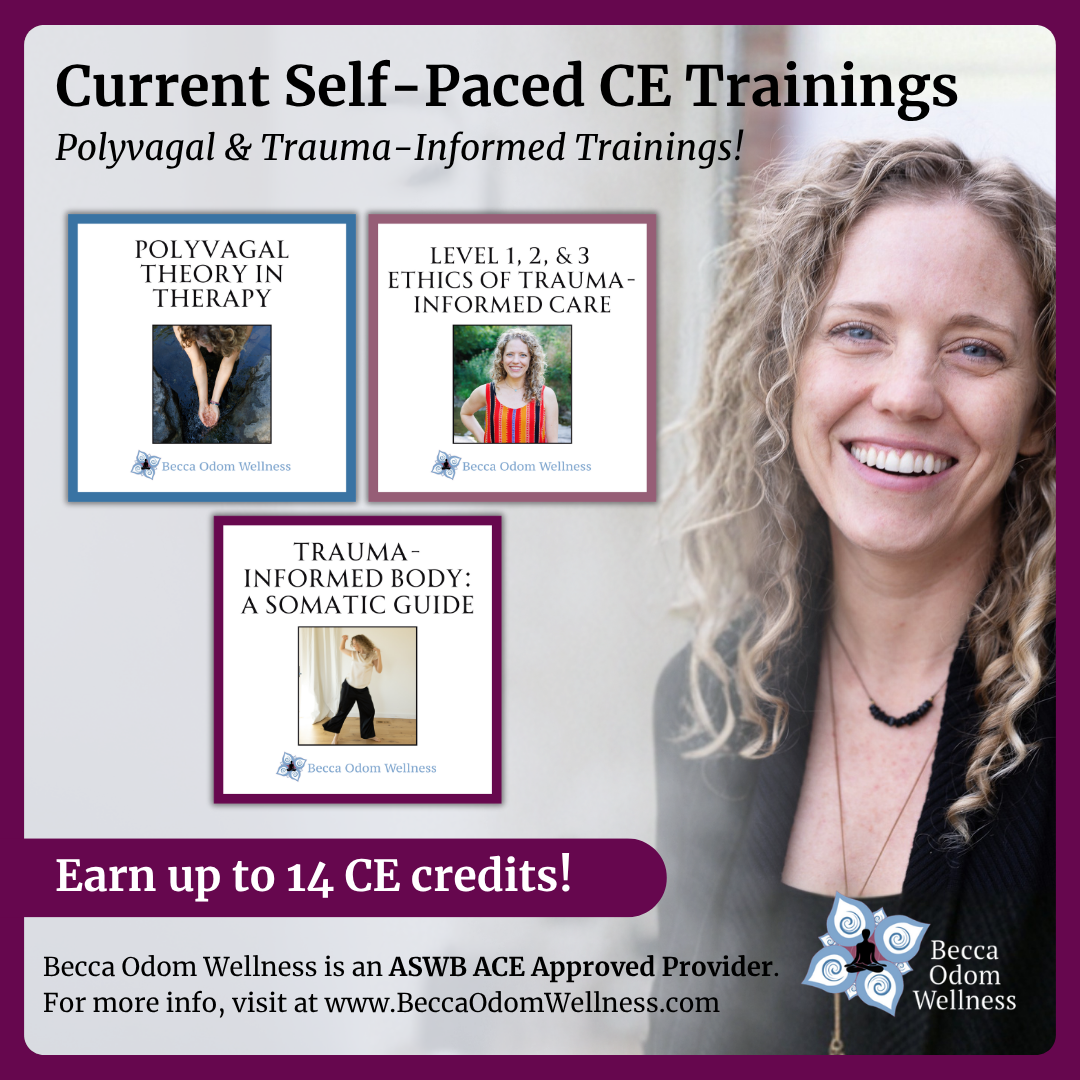
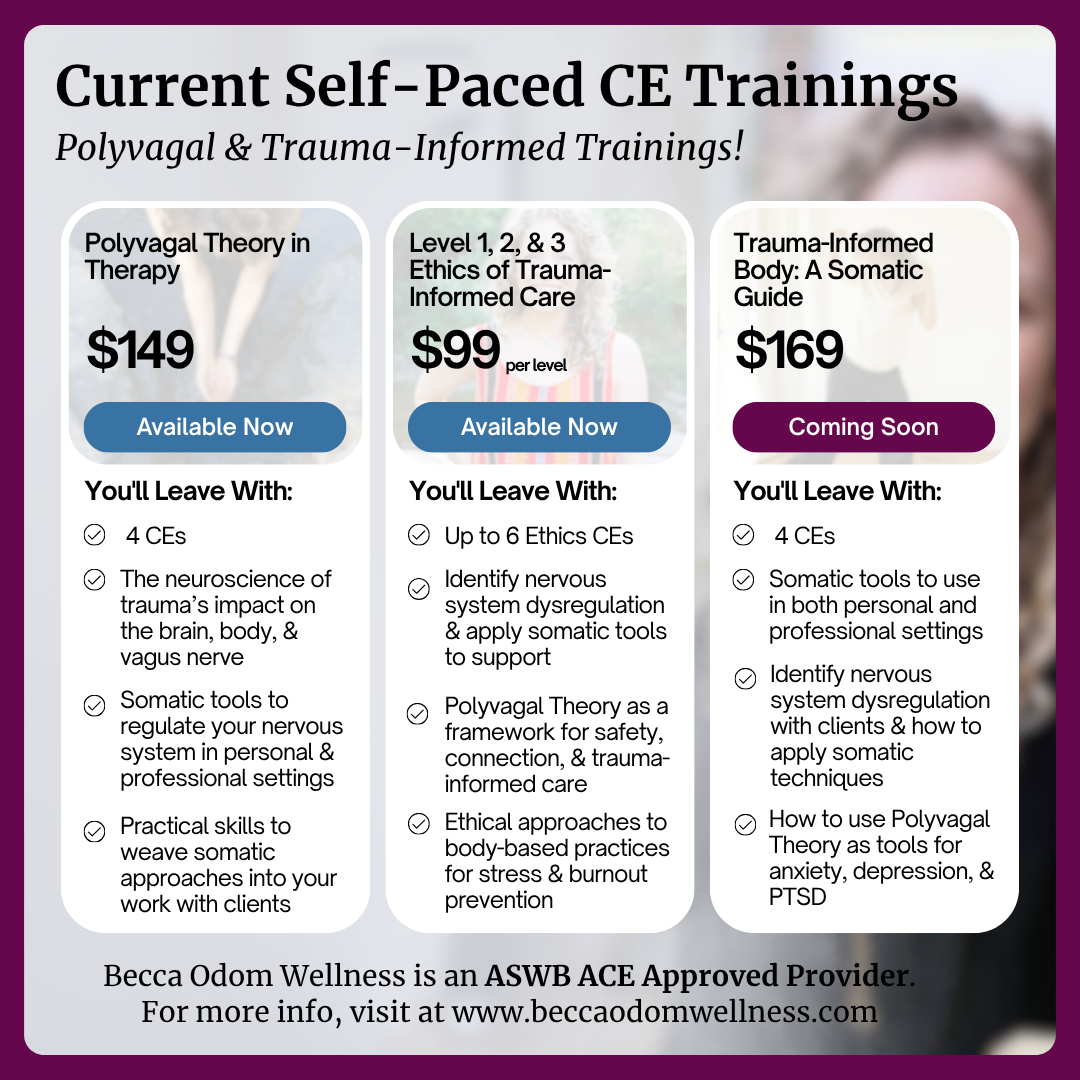
Current CE Trainings
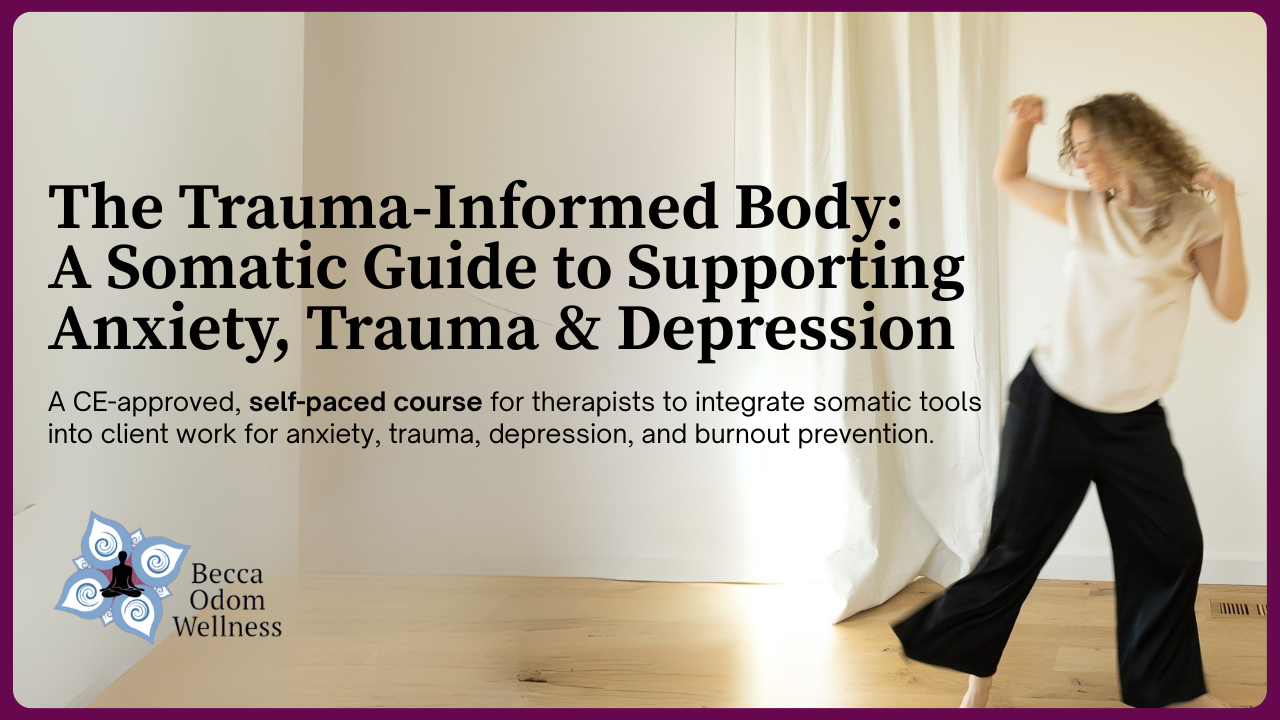
SELF-PACED • $169 • 4 CEs
The Trauma-Informed Body: A Somatic Guide
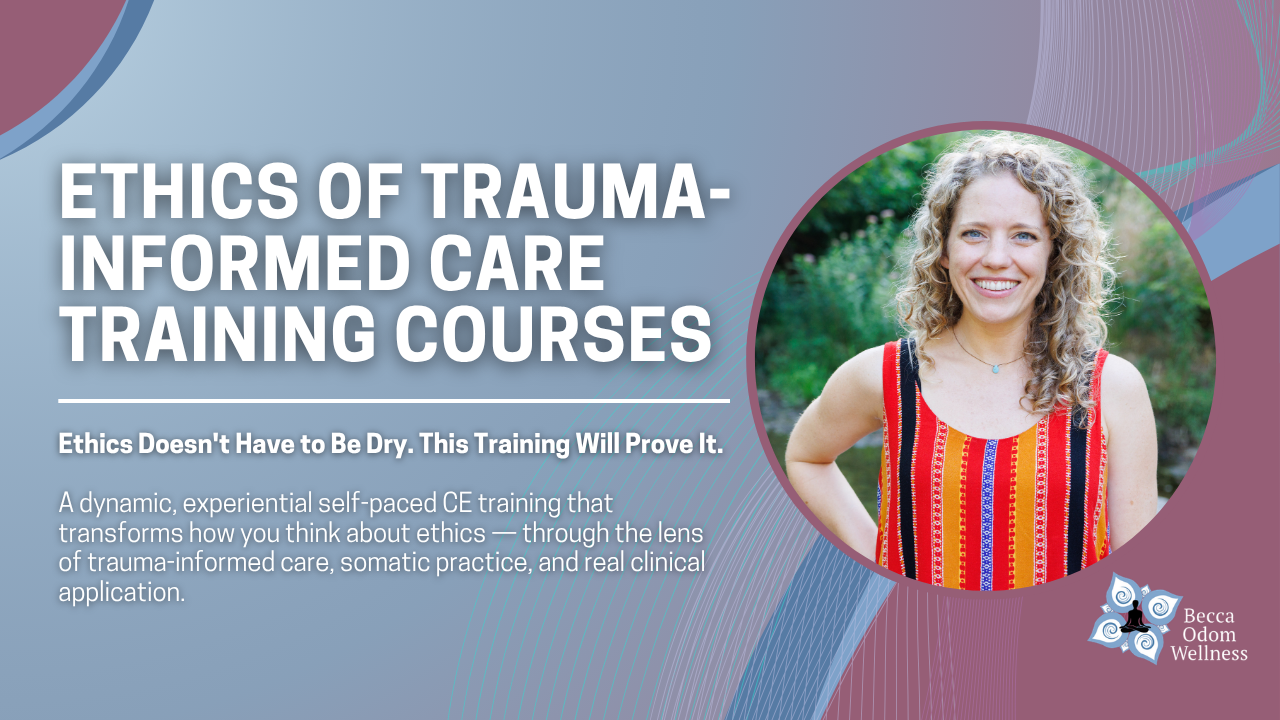
SELF-PACED • $99 EACH LEVEL • UP TO 6 ETHICS CEs
Ethics of Trauma Informed Care Training Series
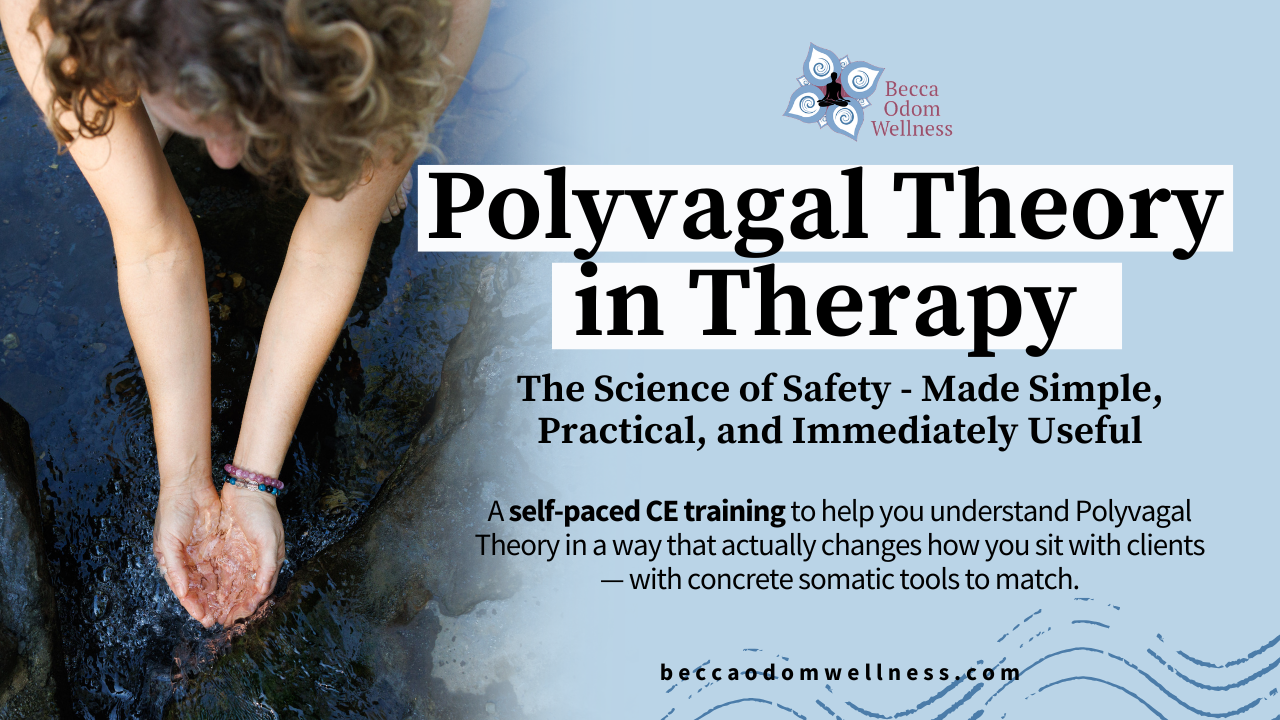
SELF-PACED • $149 • 4 CEs
Polyvagal Theory in Therapy
Our Core Values
Our approach is grounded in the principles of trauma-informed care, somatic psychology, and applied neuroscience. These core values reflect the foundation of our clinical philosophy and inform every aspect of our work — from how we design our trainings to how we engage with participants. As mental health professionals, we recognize that ethical, embodied, and sustainable practice begins with how we care for ourselves and each other within the learning environment.

Nervous System Safety First
We believe creating a sense of safety is essential to the healing and learning process.

Integrated Learning: Embodied & Research Based
We prioritize experiential learning, somatic integration, and nervous system literacy over purely cognitive approaches.

Practice What We Teach
We model the same regulation, boundaries, and consent-based communication we teach others to offer clients.

Clinician Well-Being Supports Clinical Effectiveness
Our trainings support long-term professional sustainability, not just skill acquisition.

Connection is the Catalyst for Change
We center relationships and co-regulation as the foundation of growth and transformation.

Consent Based Communication
Enhancing choice, curiosity, and collaboration through trauma-informed languaging for professionals.
Stay Connected with Becca Odom Wellness
Join the newsletter for free resources, tools, and videos — plus, you'll be the first to know about upcoming Continuing Education (CE) trainings
We respect your privacy and never share your information. Unsubscribe anytime.
What Therapists Are Saying
Hear what past students have said about these courses.

★★★★★
"I found Becca to be both peaceful and knowledgeable. She has made me more aware of the energy I bring to sessions and how that can impact my clients."
Adina Middleman, MSW, LCSW

★★★★★
"This well thought out training incorporated psychoeducation on the nervous system and meaningful as well as intentional practices for therapists and clients to co-regulate. This information was extremely applicable to my practice."
Michaela Landry LCSW

★★★★★
"Becca does a great job presenting complex information in relatable and engaging ways."
Elizabeth Doppler-Bourassa, Ph.D.

★★★★★
"Becca is a vibrant, articulate, and warm presenter and this is a great way for trauma therapists to get the required ethics credits while learning new treatment and self-care techniques!"
Phil Harford, LICSW